| List of Pipe Organ Profiles | Pipe Organ Profiles Home | N8RRB Home | E-mail the Webmaster |
| St.
Andrew Catholic Church 3/35 Austin | Main Page | Great Division | Swell Division | Choir Division | Pedal Division | Under the Pipes | Console | Facade Photos | Other Photos | Stop List |
St. Andrew Catholic Church
Upper Arlington, OH
3/35 Austin
Opus 2771 - 1998
Other Photos of the Organ
Click on the photo to get a larger image
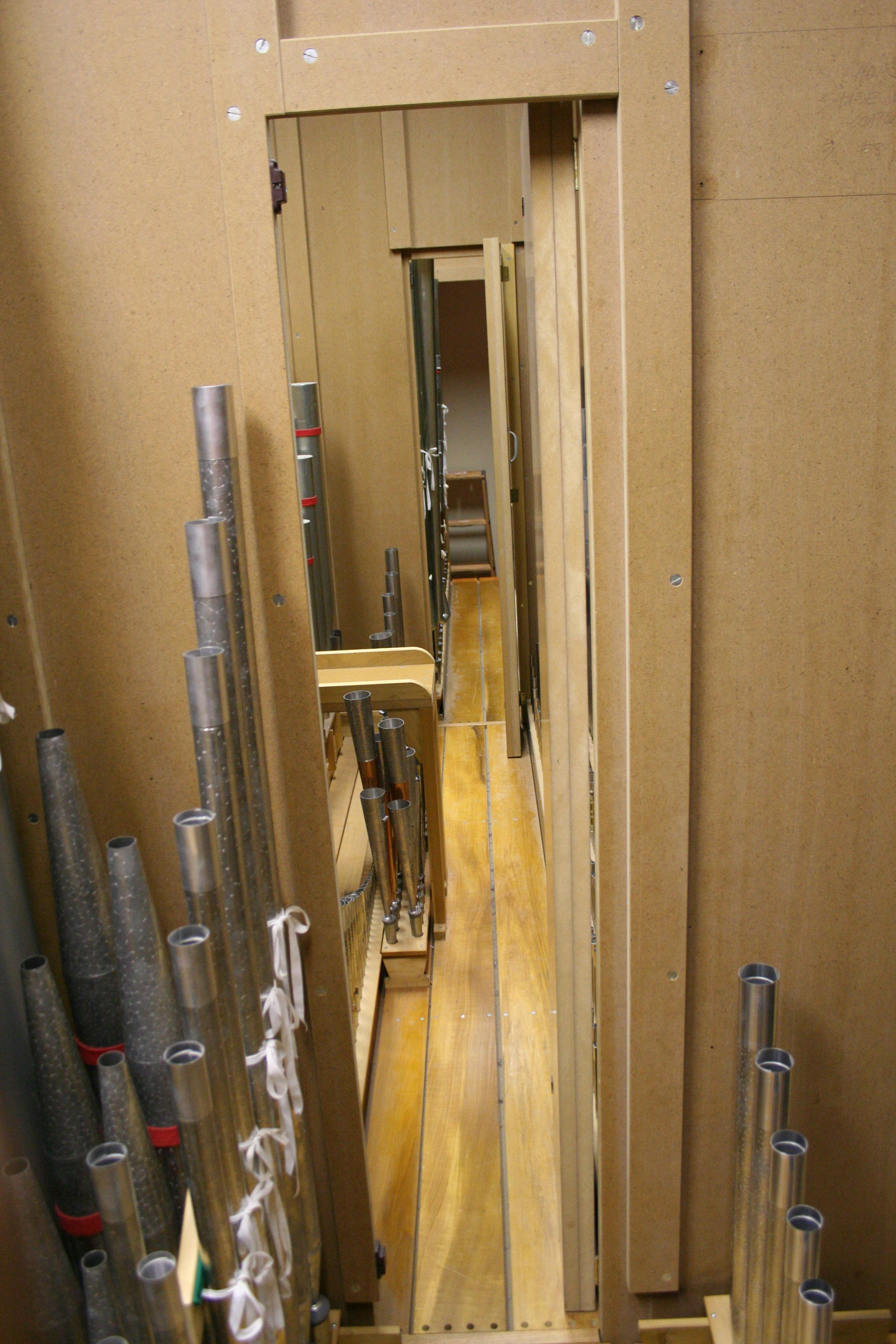 |
Here's an interesting shot through the case of the organ. The view is from the Choir Division, the middle room is the Great Division, and the far room is the Swell Division. Note the ladder at the end which is needed to get in the case. |
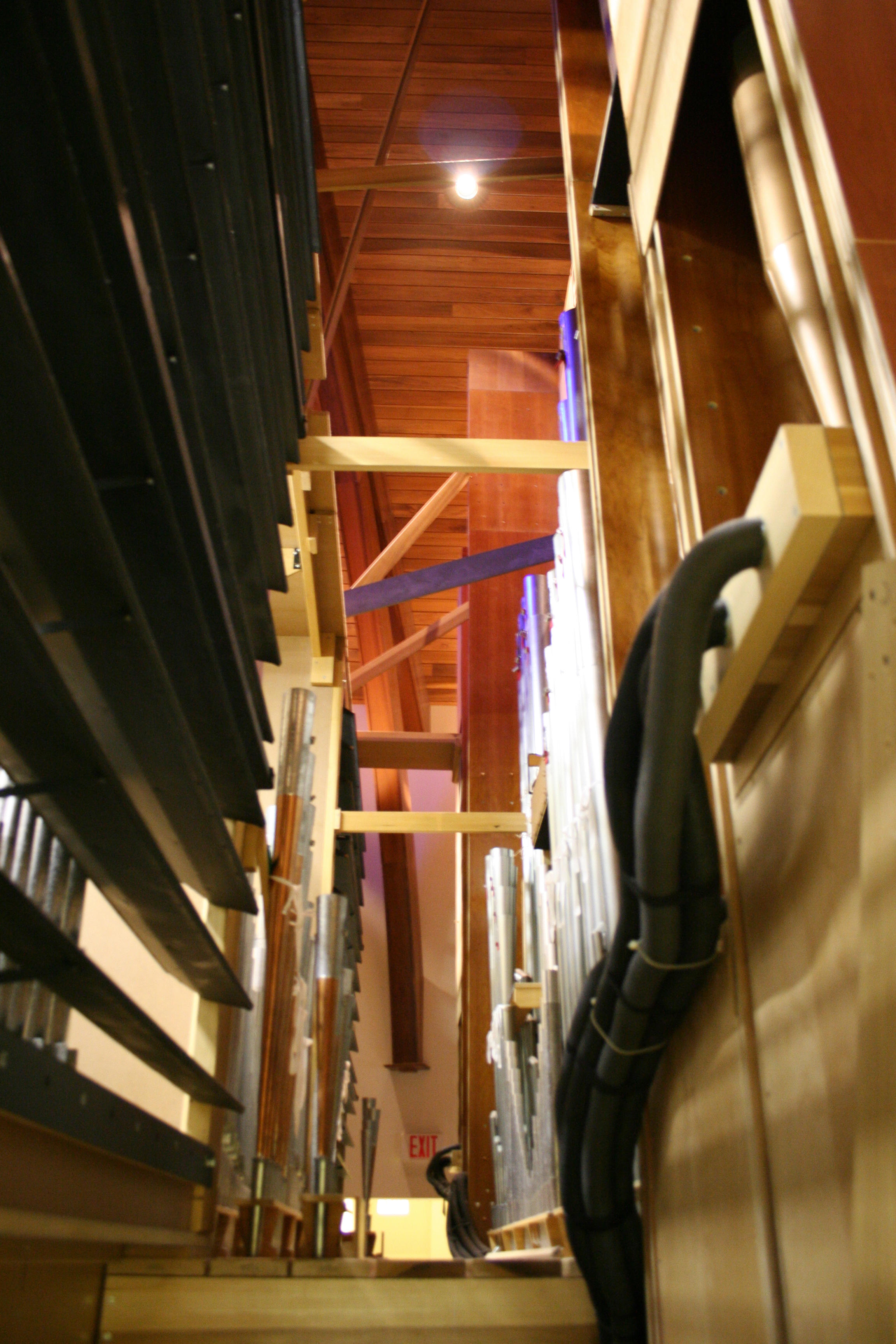 |
Also from the Choir Division side from the organ, this shows how the organ case is actually in a couple sections. To the left are the three chambers (the Choir Division expression shades are at left), and to the right is the facade. The pipes in the middle are part of the Great Division. The black tubes in the foreground are air lines for the pipes in the facade. |
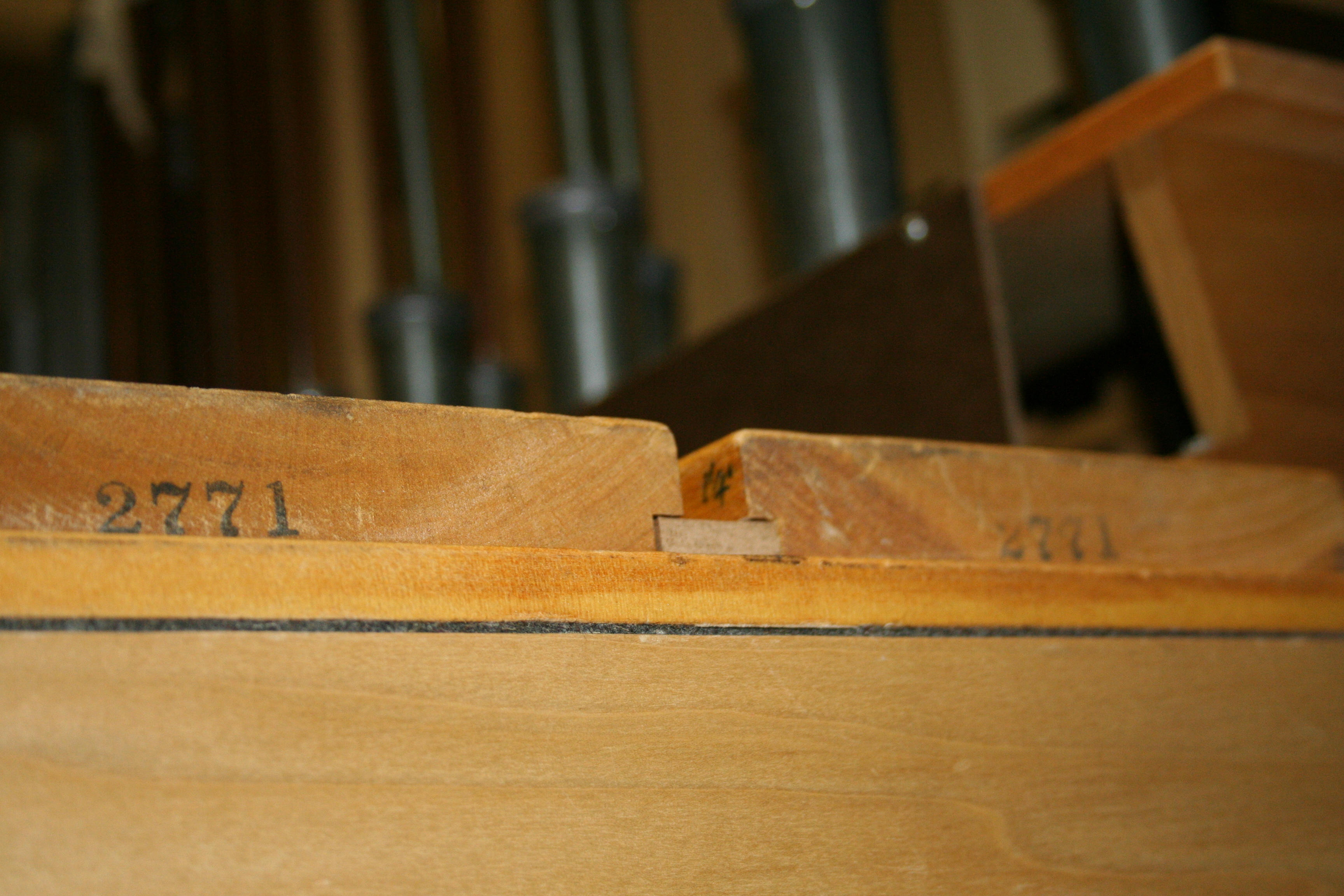 |
Almost every piece of wood is stamped with the organ opus number. These floor boards remind us that we're looking at Austin Opus #2771. |
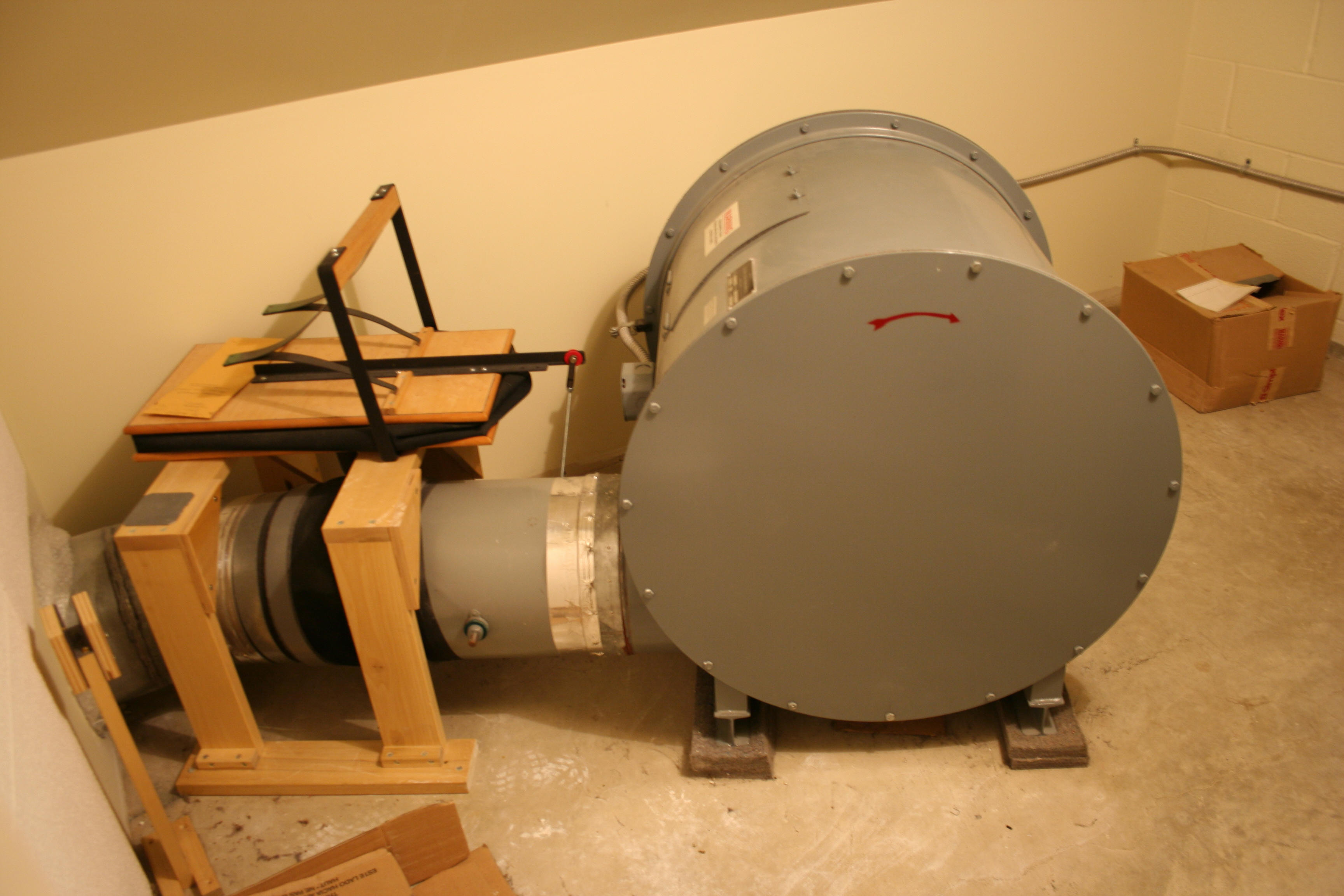 |
A pipe organ cannot function without air. Along the same lines, a pipe organ cannot sound solid without adequate air supply. This is not a problem with this instrument as no matter how many ranks are selected the sound is solid. Here we see the blower for this organ. |
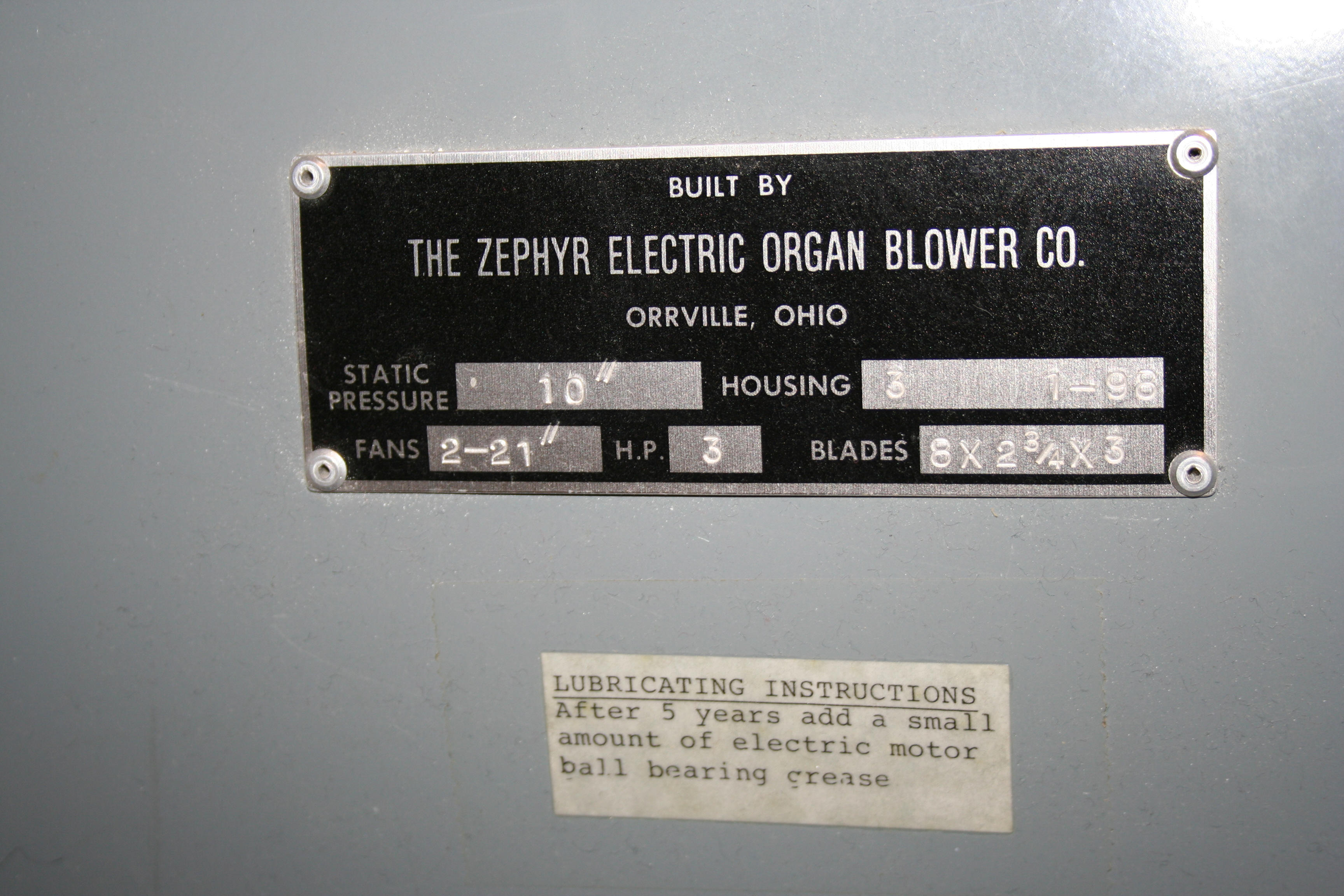 |
The blower is a pretty simple electronic device. Here we see that this is a 3 HP blower producing 10" of static pressure. This figure is important in ensuring that the organ has adequate power regardless of how many pipes are speaking at once. |
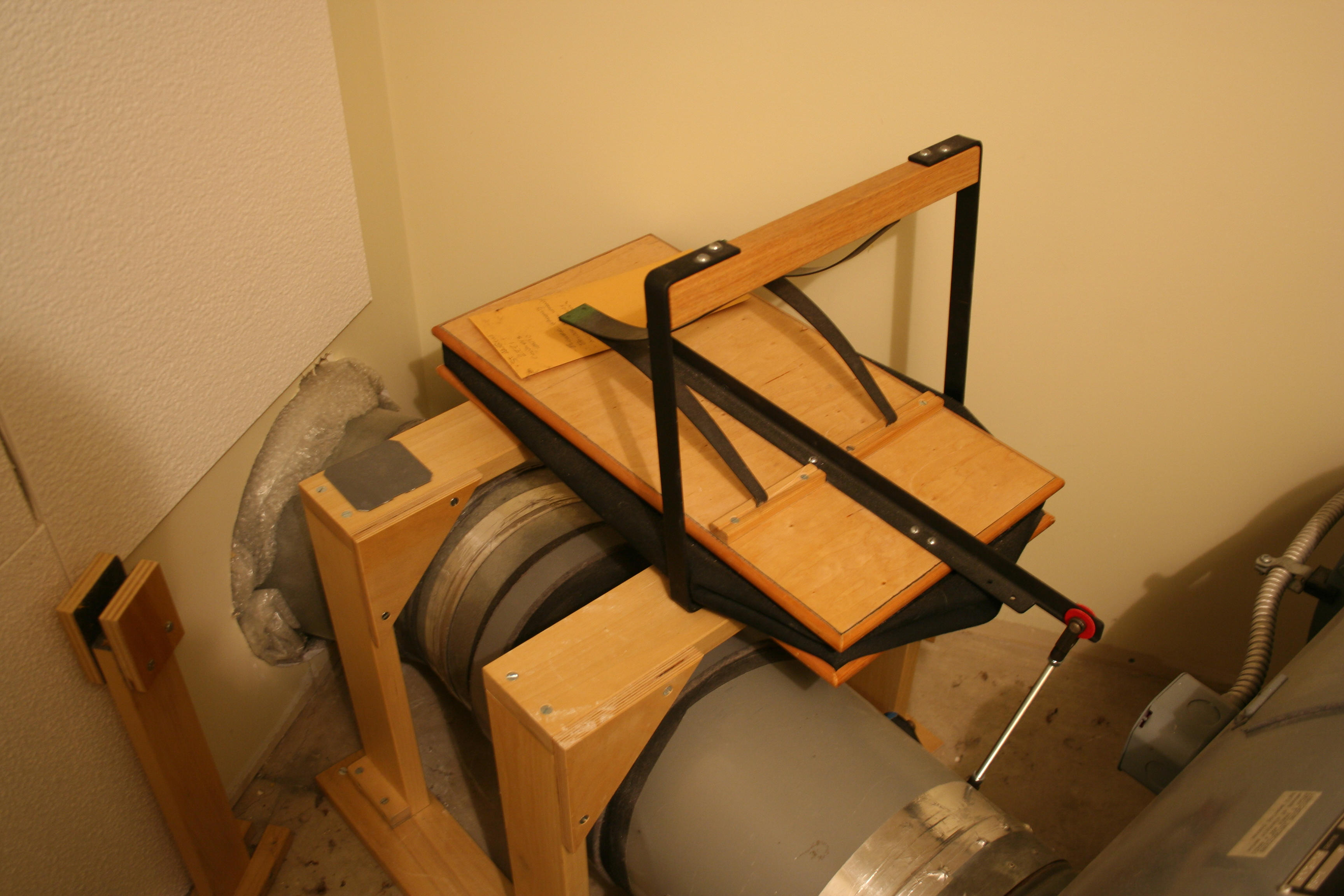 |
This is a regulator chest. It will expand and contract according to the needs of the organ. |
| St.
Andrew Catholic Church 3/35 Austin | Main Page | Great Division | Swell Division | Choir Division | Pedal Division | Under the Pipes | Console | Facade Photos | Other Photos | Stop List |
| List of Pipe Organ Profiles | Pipe Organ Profiles Home | N8RRB Home | E-mail the Webmaster |