| List of Pipe Organ
Profiles |
Pipe Organ Profiles Home |
N8RRB Home |
E-mail the Webmaster |
| St. Christopher Catholic Church - 2/26 Peebles-Herzog | Main Page | Great Division | Swell Division | Pedal
Division | Console | Stop List |
St. Christopher Catholic Church
Columbus, OH
2/26 Peebles-Herzog
2007
Great Division
Click on the photo to get a larger image
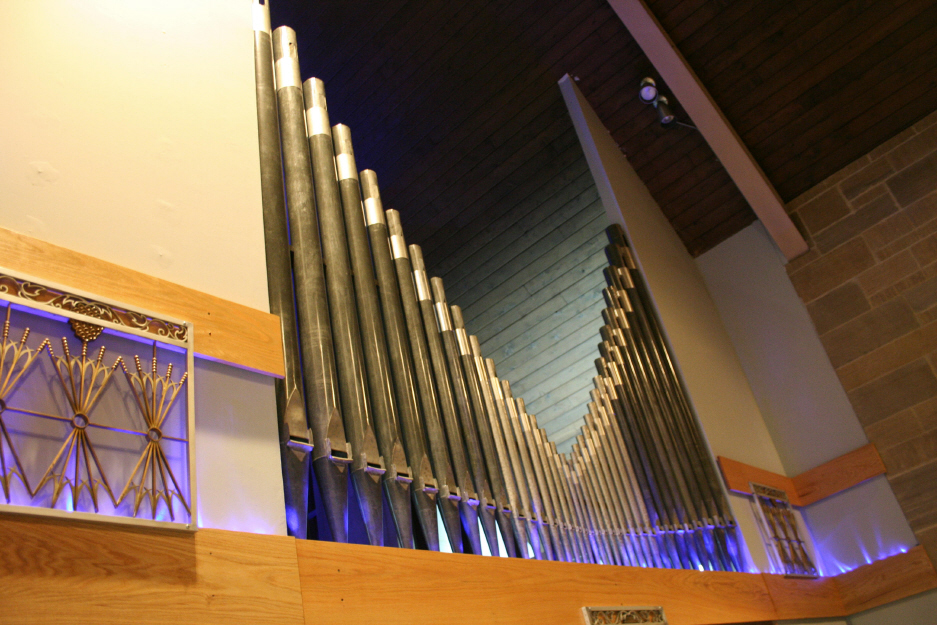 |
Most of the pipes in the Great Division are on the right side of the church as you face the rear. The exception is the 8' Principal rank which makes up the facade for this organ. Note that the pipes in the middle are shinier possibly indicating that these are newer pipes and not from the original rank. |
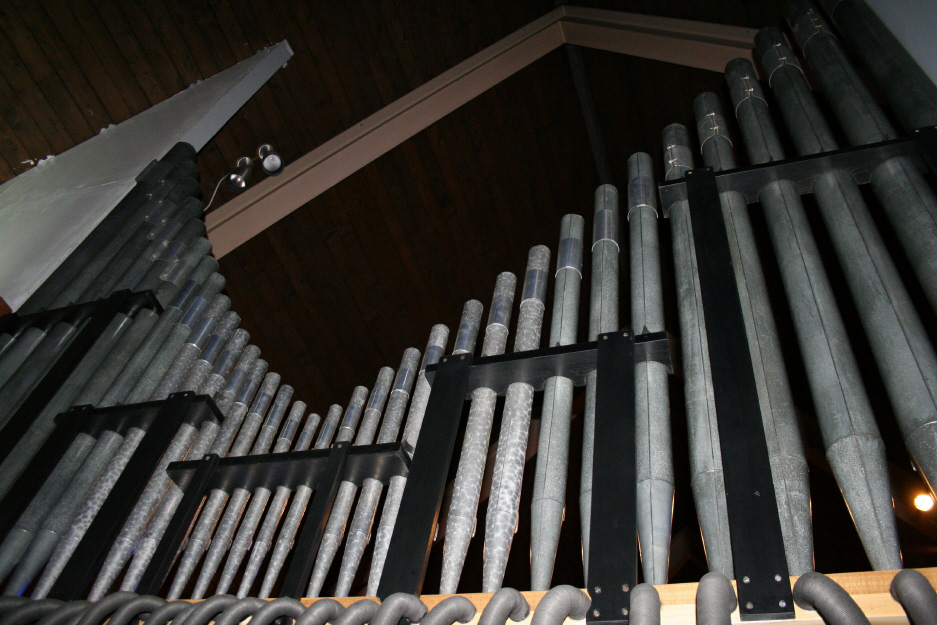 |
Here's the view from behind the facade of pipes. This gives a better view of the differences between the shiny pipes in the middle and the dull gray pipes on either side. The hoses at the bottom are the wind supply pipes for the rank. |
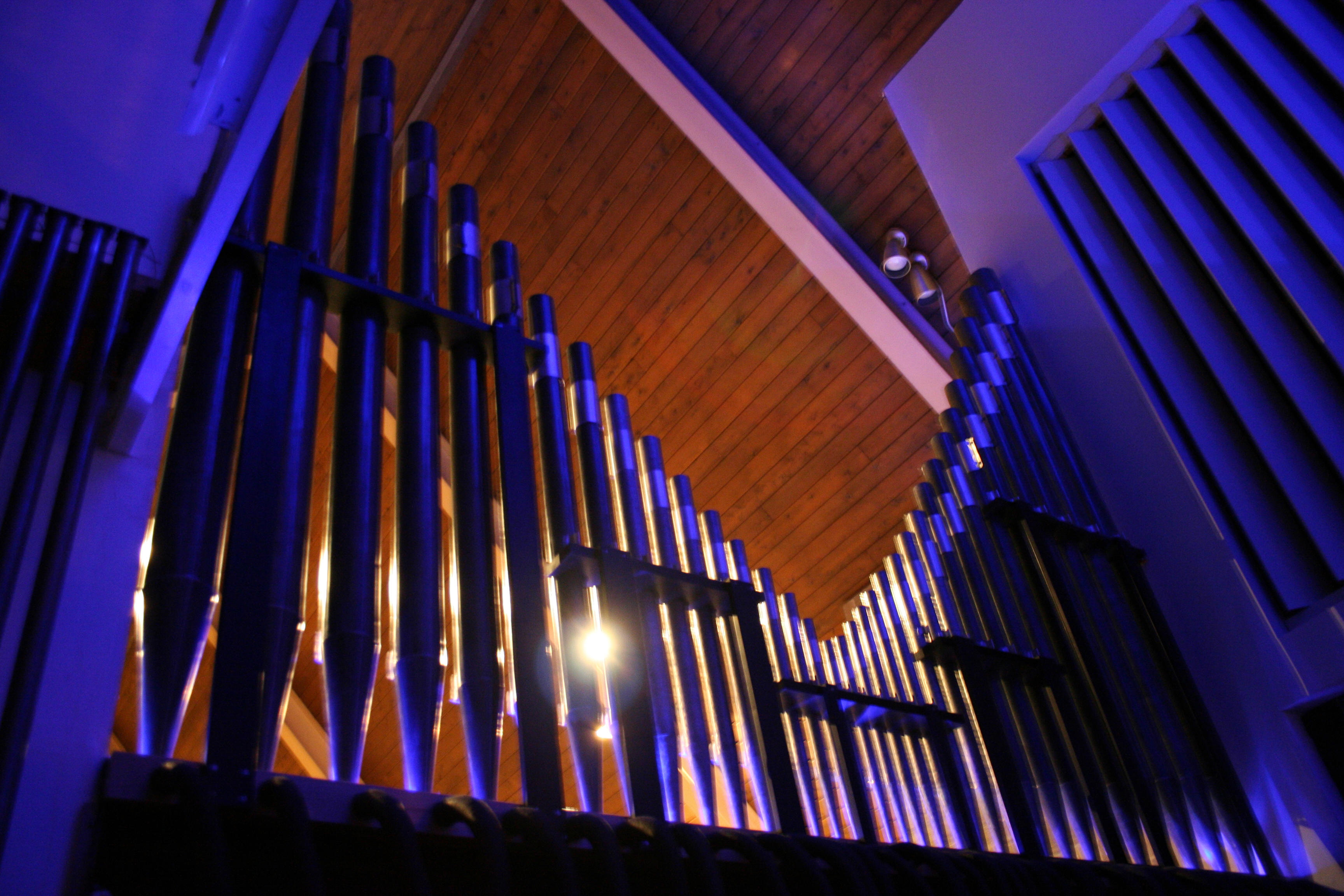 |
The blue lights which illuminate the window in the rear of the church create a striking effect of the 8' Principal rank. |
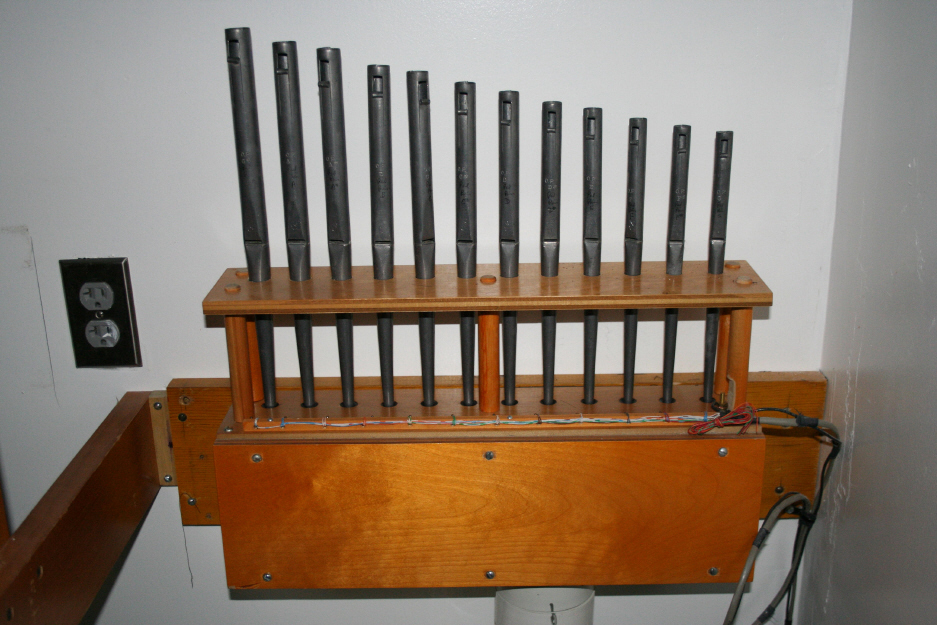 |
Tucked away just below the facade are the smallest pipes of the 8' Principal rank. A close inspection of the top of the pipes reveals the imperfect circular construction. Also note the lettering stamped on the pipes. |
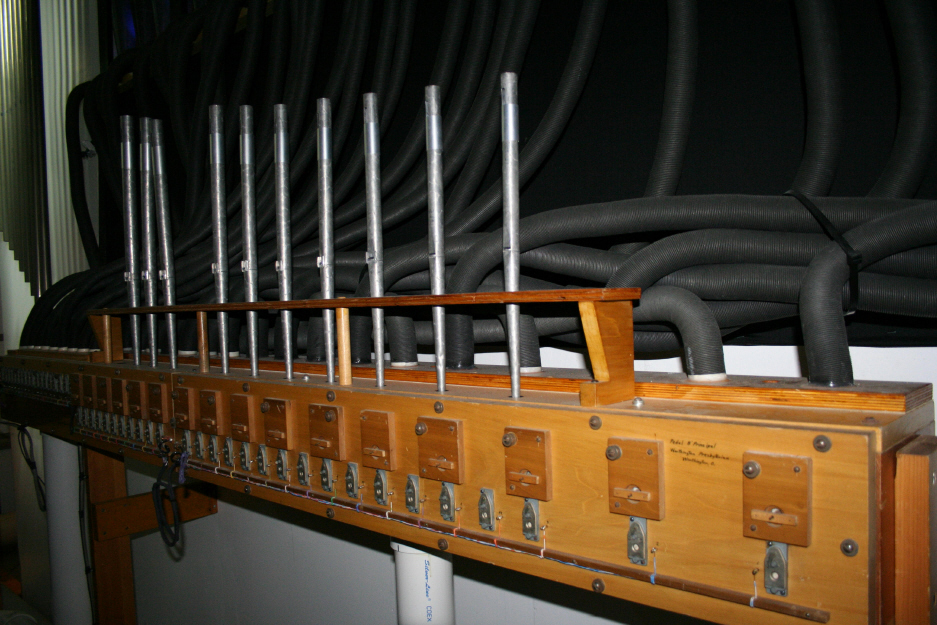 |
Again just below the facade and to the left of the small pipes shown above are the rest of the 8' Principal pipes. Note the maze of wind supply hoses for the facade pipes in back! |
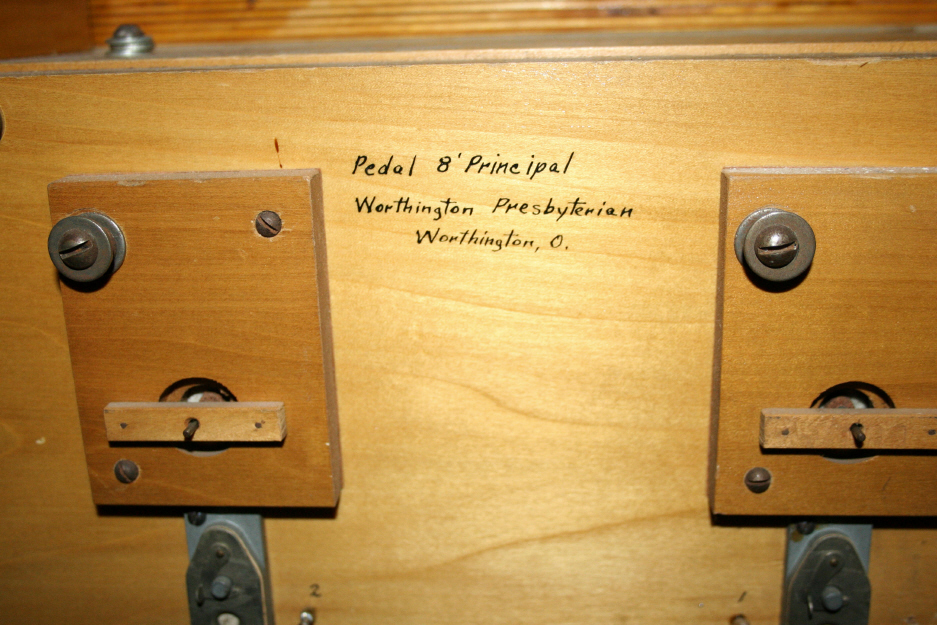 |
This rank of pipes also has writing to indicate where it was originally installed. This is the same information written on the pipe rack in the Swell Division thus connecting it to the installation of Estey Organ Opus 2541 in 1926. |
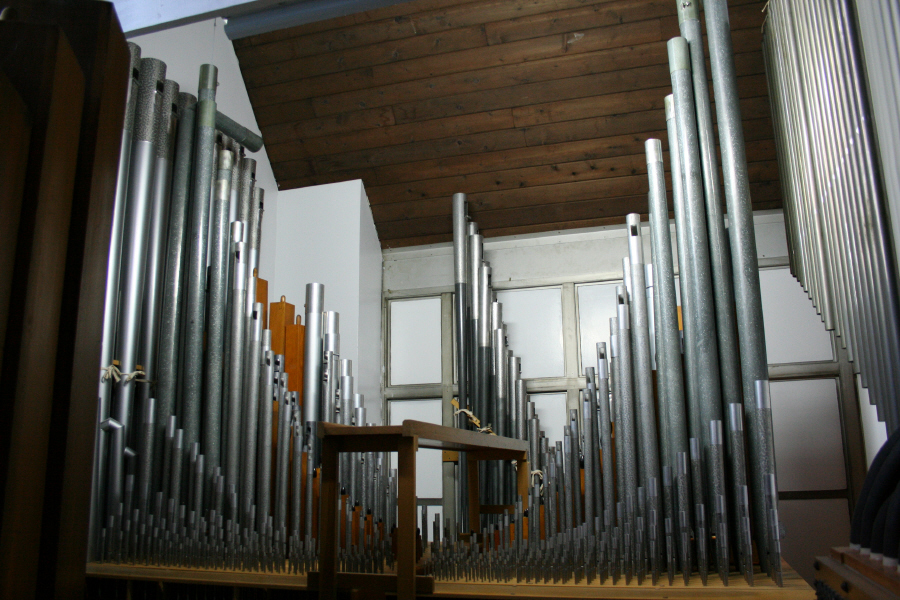 |
With the exception of the pipes in the facade and immediately behind it, this photo pretty much shows the entire Great Division of the organ. Note the chimes on the far right side of the photo. |
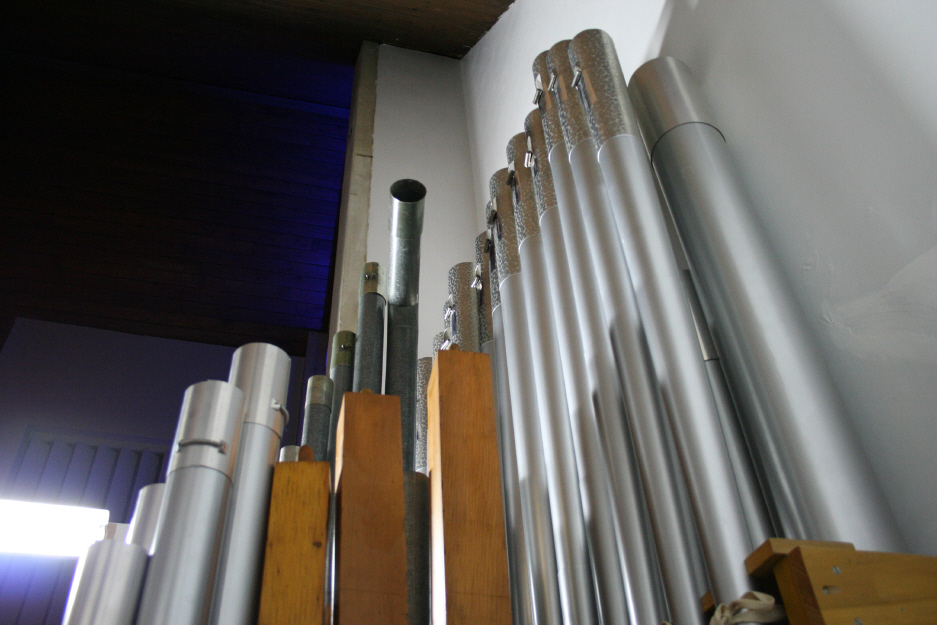 |
Here's a better view of the largest pipes of the 8' Principal rank (against the wall), and the 16' Trumpet rank (in front of the Principal rank). The Principal pipes also look like they are brand new. |
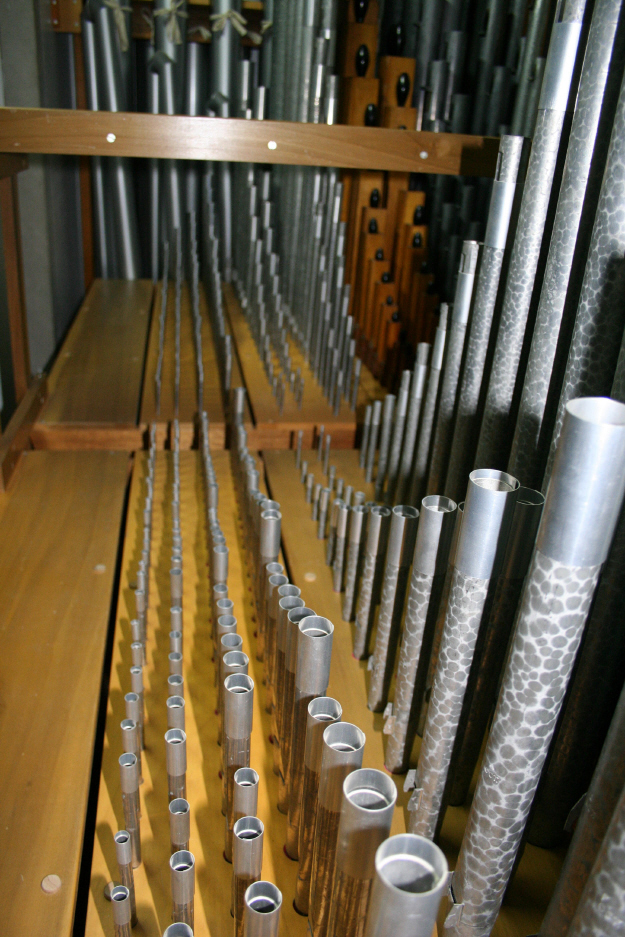 |
The Great Division has a four rank Mixture of 1 1/3' pitch. In this view we can see that the first four rows of pipes from left to right in the Great Division are the mixture rank. Rows five and six are the 2' Super Octave rank. |
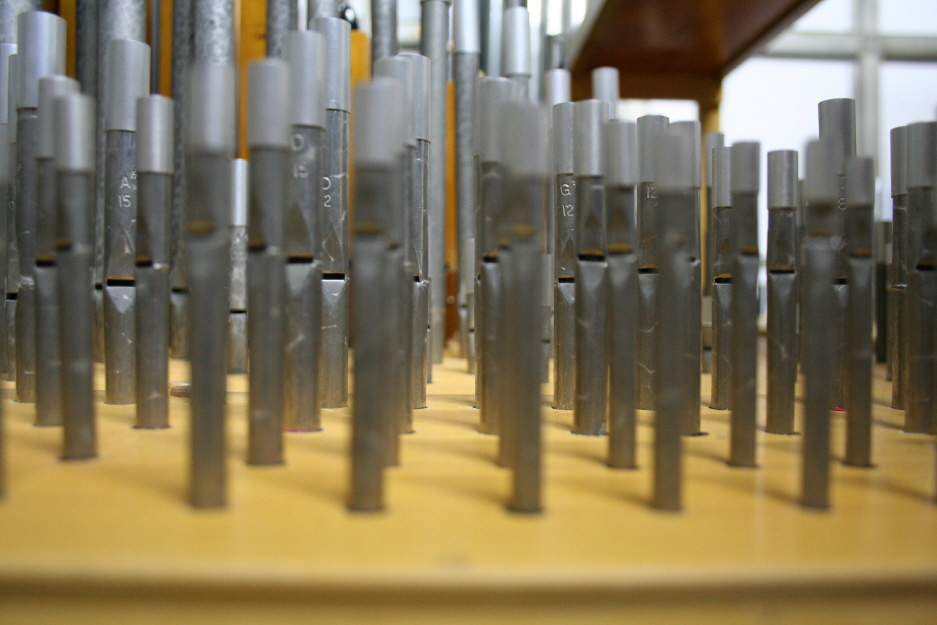 |
Here's an "artsy" photo of the pipes in the Great Division with the Mixture pipes squarely in the front. Note the number and pitch marked on many of the pipes. The numbers are a puzzle to me since there doesn't seem to be a clear pattern to them. |
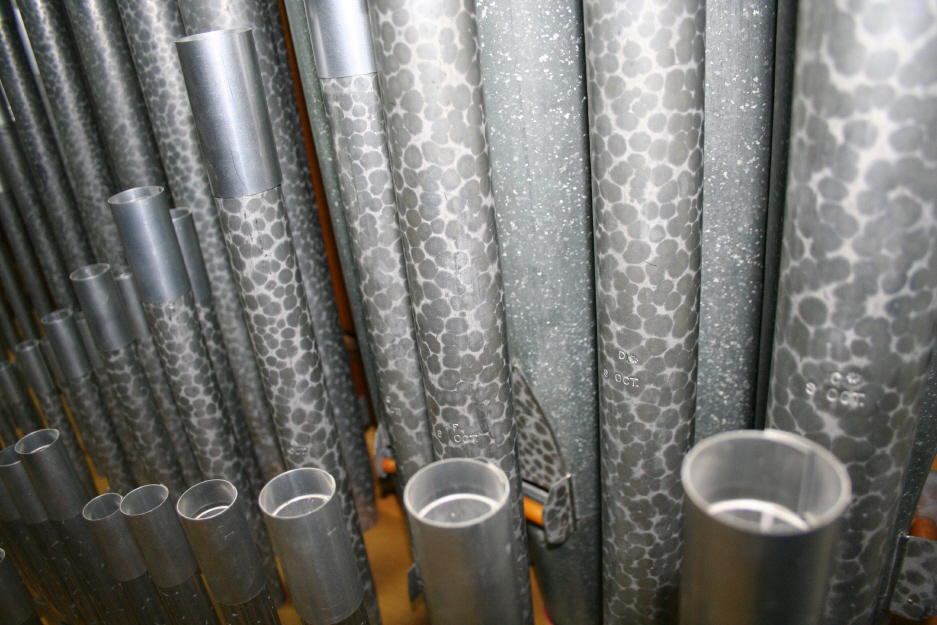 |
The next two rows of pipes behind the Mixture are the 2' Super Octave rank. Identifying these pipes is easy since they have "S. OCT." stamped on the pipes. |
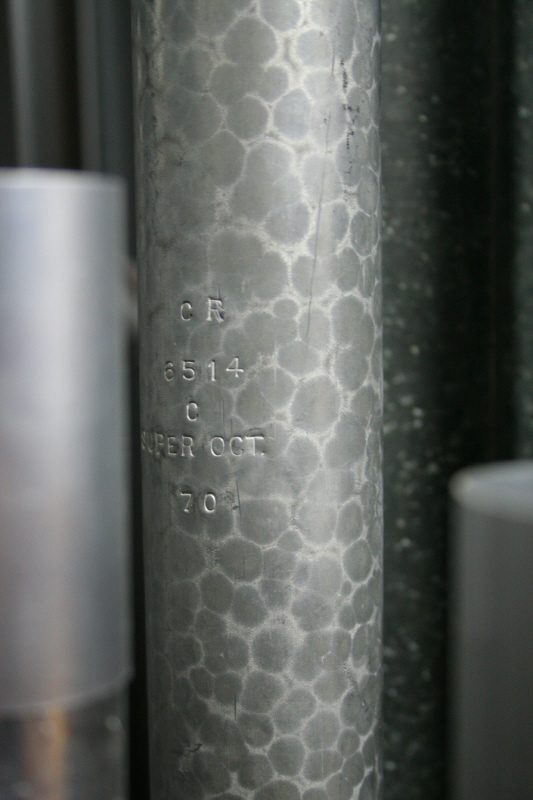 |
A closer look at a Super Octave pipe reveals another opus number! Opus 6514 corresponds to the huge M.P. Moller organ at Broad Street Presbyterian Church in Columbus, OH built in 1937. Schantz rebuilt the instrument in 1986 and apparently some of the pipes found their way into Peebles-Herzog's hands. |
 |
This photo shows
several ranks of
pipes. In
front at the bottom right are some of the 2' Super Octave pipes. The
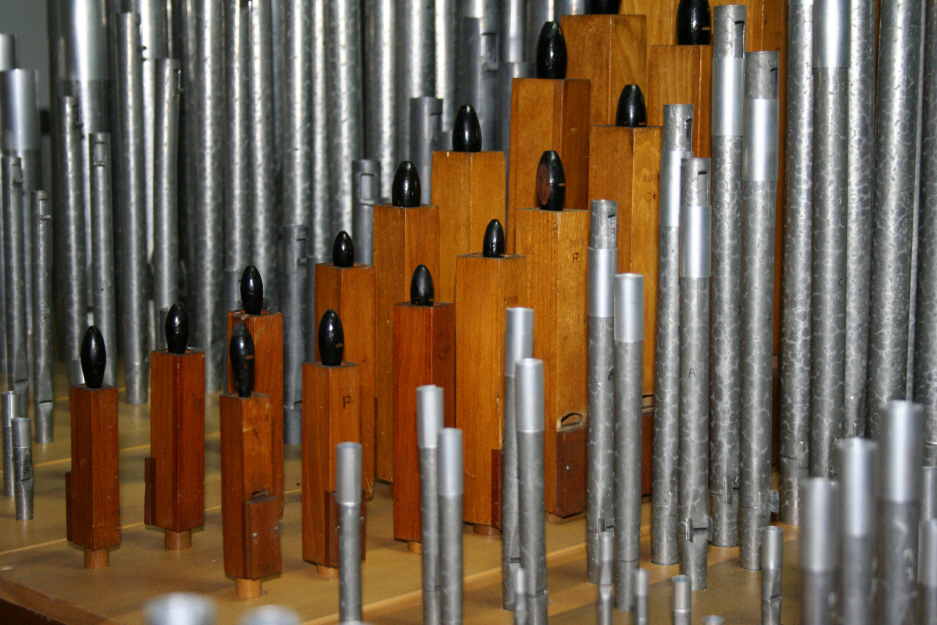
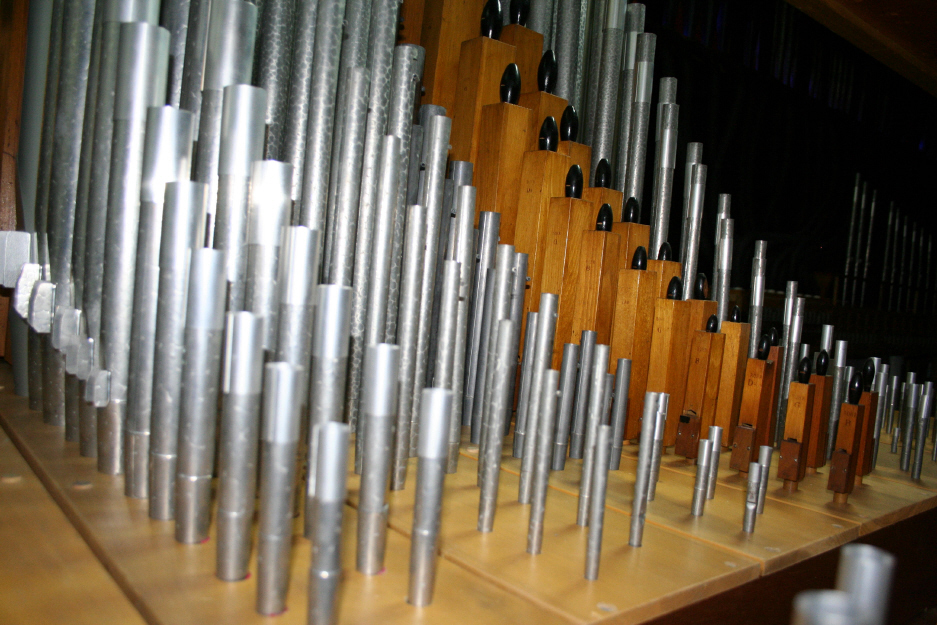
two rows of pipes in front of the wood pipes is the 8' Dulciana rank. The wood pipes are an oddity. They likely are of the 8' Hohlflote rank, however a close inspection reveals that they have the name "ROHR" stamped on them indicating these are Rohrflote pipes. Their construction definitely points to being of this type (note the slit in the middle of the black stopper on the top of the pipe) but it is possible they have been modified in a way not visible here. The spec. sheet from Peebles-Herzog says "Hohlflote" so that's what we're calling them! These obviously are older pipes and possibly could have been from one of the other builders other than Estey (Muller, Schantz, or A.W. Brandt). |
 |
Now on the back side
of the
pipes, behind the
wood pipes is the 4' Traverse Flute rank. Though not seen in these
photos (and barely discernible in the photo above), these pipes have a
hole in the middle of them. The construction of these pipes lends itself to being of the Traverse Flute rank, but there is some evidence which suggests that the wood pipes are the Traverse Flute, and the metal pipes are the Hohlflote. Finally, the two rows of pipes on the far left is the 4' Octave rank. |
 |
Mounted on the wall
next to the
8' Principal
rank are the chimes. I've never been a big fan of the chimes, but Music
Director Mark Voris demonstrated how they can add a whole other texture
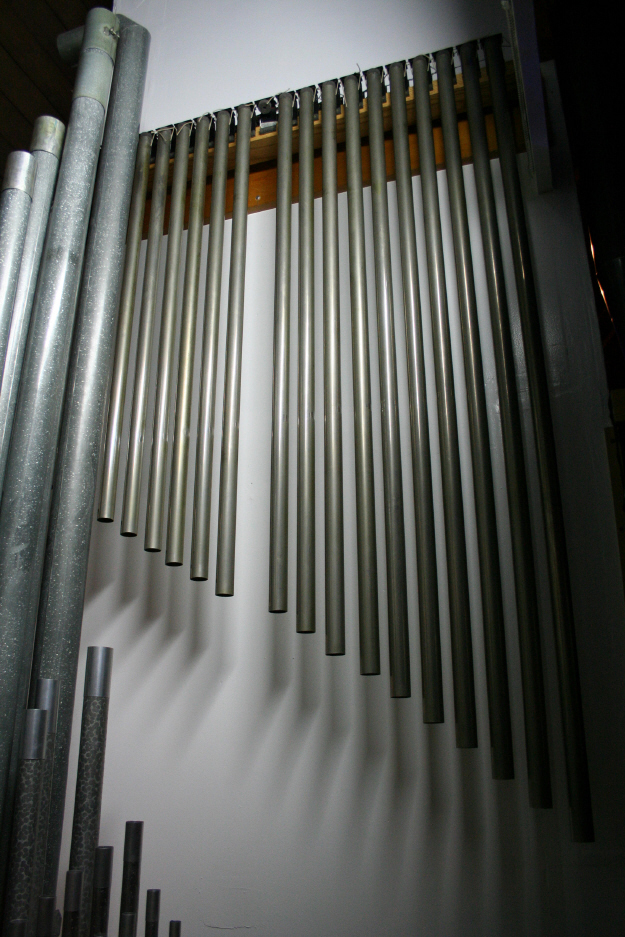
and sound to the organ. After hearing his demonstration I was sold! The large pipes on the left are of the 8' Dulciana rank. |
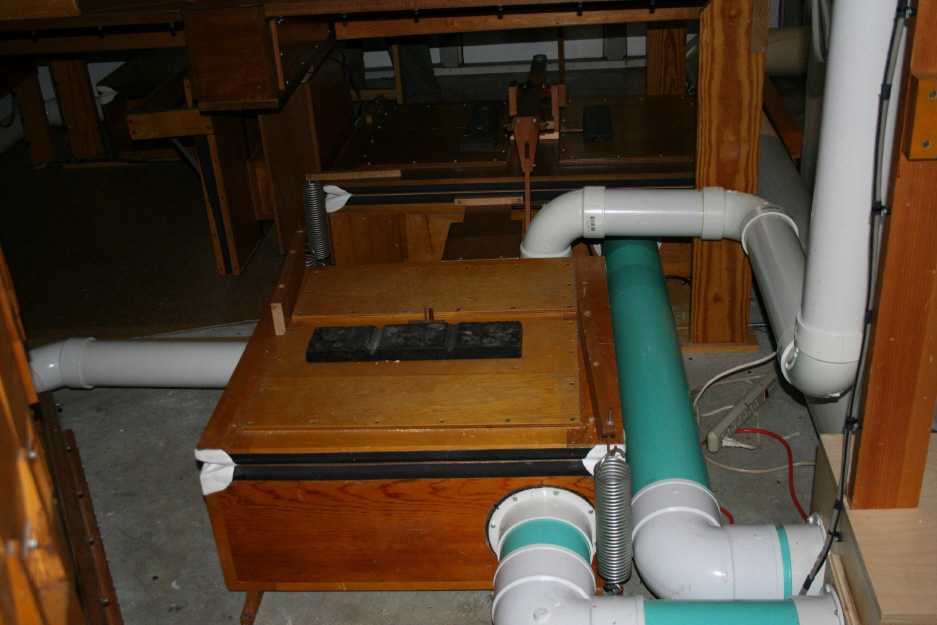 |
Here we see a couple of the wind chests for the Great Division, as well as some of the wind supply lines. The main air supply from the blower is on the the right towards the back. |
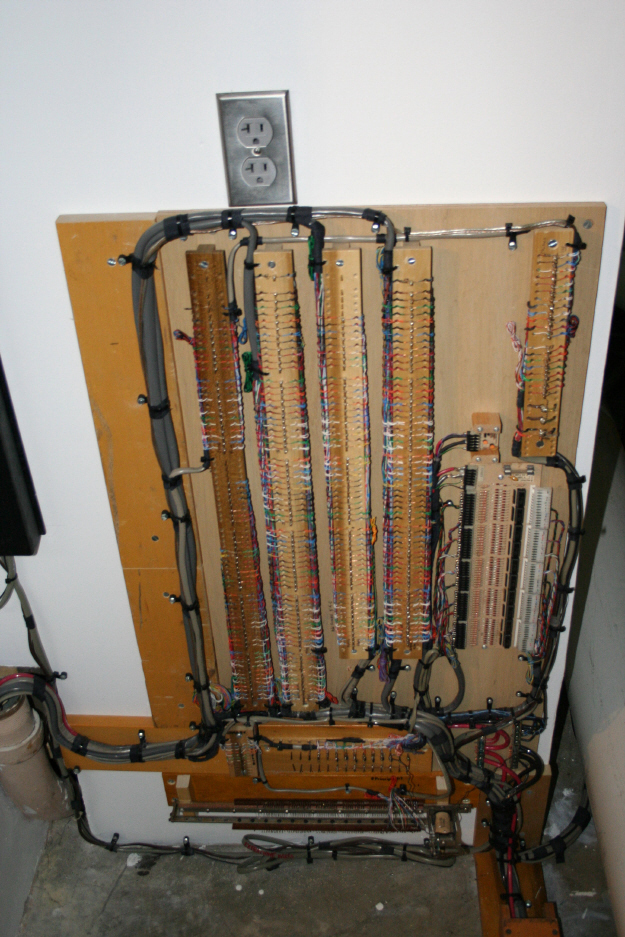 |
Here we see the main wiring board for the Great Division. More than likely the organ was completely rewired when it was refurbished by Peebles-Herzog. |
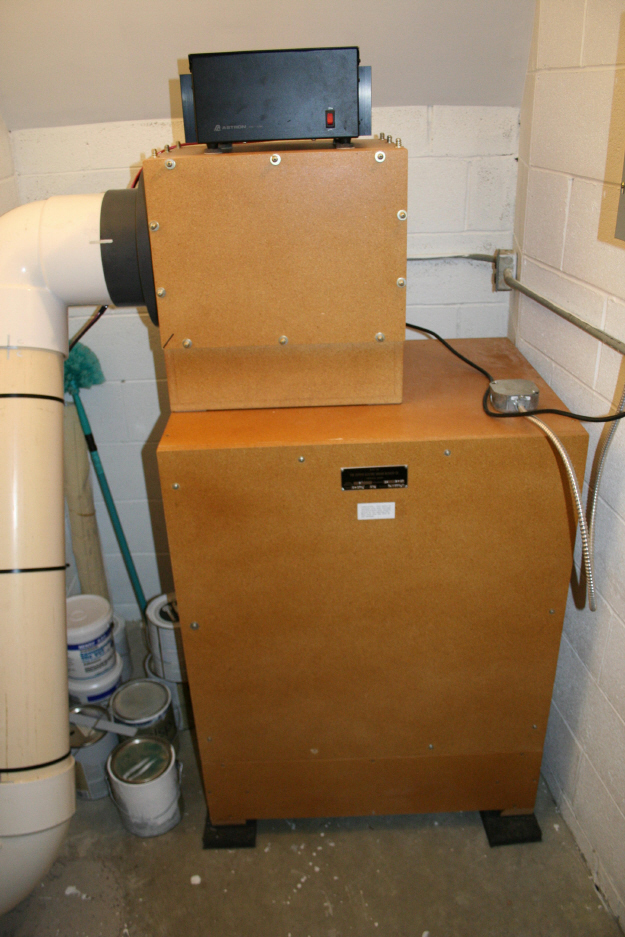 |
For this organ, the blower got it's own cabinet! The big box on the bottom houses the blower, with the box on top likely being a pressure equalization wind chest of some kind. Note the large air supply line on the left. |
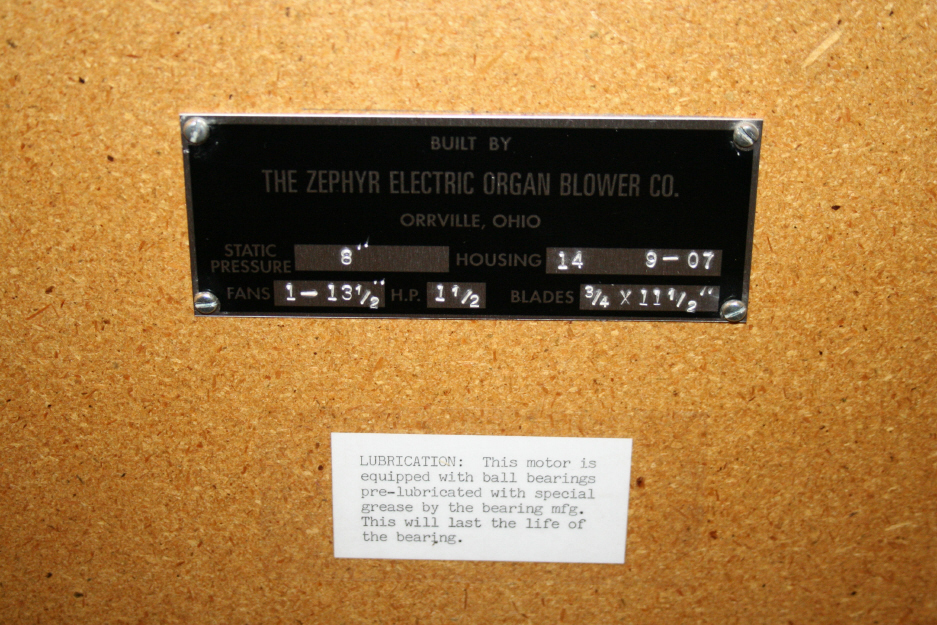 |
Here we can see the specs for the blower. This was built by the same company who built the blower for the St. Andrew Catholic Church Austin organ, however this blower (like the organ) is smaller than the St. Andrew blower. |
| St. Christopher Catholic Church - 2/26 Peebles-Herzog | Main Page | Great Division | Swell Division | Pedal
Division | Console | Stop List |
| List of Pipe Organ
Profiles |
Pipe Organ Profiles Home |
N8RRB Home |
E-mail the Webmaster |